The Vagus Nerve & Yoga
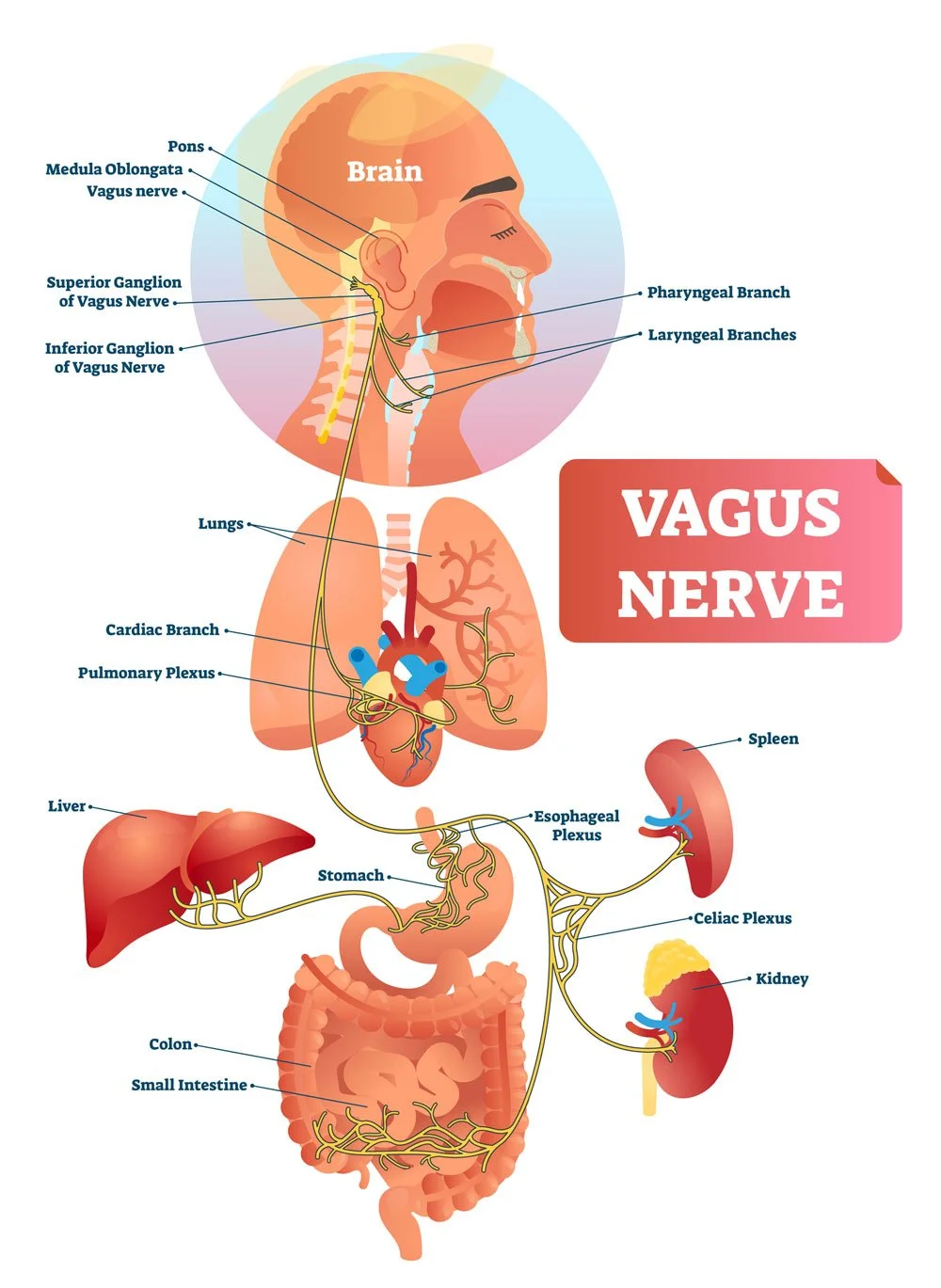
Yoga is well known for supporting both our physical and emotional well-being. One of its profound benefits is its ability to support the nervous system, particularly through strengthening the vagus nerve, a key component of the parasympathetic nervous system.
The vagus nerve is the body’s communication superhighway, connecting the brain with the heart, lungs, and digestive system.
When your vagal tone is healthy, your nervous system can respond to stress more smoothly, recover faster, and maintain emotional balance with greater ease. Essentially, you become more adaptable, moving fluidly between states of calm and alertness.
Why Vagal Tone Matters
A strong vagal tone allows the nervous system to regulate itself efficiently. Benefits include:
Faster recovery from stress – Move smoothly from high-alert states to calm
Safe activation and focus – Stay energised without overdrive
Lower anxiety and stress – Promote emotional stability
Improved digestion and metabolism – Support gut health
Enhanced emotional regulation – Respond thoughtfully instead of reacting impulsively
Stronger social connections – Foster empathy and healthy communication
Better sleep and energy recovery – Support restorative rest and vitality
A well-toned vagus nerve essentially creates a nervous system that is adaptable, resilient, and balanced.
Healthy vagal tone can be thought of as an optimal balance of parasympathetic and sympathetic nervous system actions that allows you to respond with resilience to the ups and downs of life.
- Dr. Arielle Schwartz
How Yoga Stimulates the Vagus Nerve
Yoga includes practices such as breathwork (pranayama), meditation, and mindful movement/asana, all of which can help with vagal toning. Below are a few examples of practices that help stimulate the vagus nerve:
Breathing Techniques (Pranayama)
Diaphragmatic / Belly Breathing – Inhale deeply into the belly, exhale slowly, allowing full relaxation.
Alternate Nostril Breathing (Nadi Shodhana) – Balances the nervous system and stimulates the parasympathetic nervous system.
Ujjayi Breath (Ocean Breath) – Slight constriction of the throat while breathing stimulates the vagus nerve.
Chanting and Vocalisation
The vagus nerve passes close to the vocal cords. Practices involving vocalisation can stimulate it:Chanting (“Om”) – Creates vibration that activates the vagus nerve.
Humming – Gentle humming on the exhale calms the nervous system.
Asana (poses) that Stimulate the Vagus Nerve
Certain postures compress or stretch areas connected to the vagus nerve, helping to activate it. A few examples of this include:
Forward Folds
Bridge Pose
Fish Pose
Child’s Pose
Legs-Up-the-Wall
Twists
Neck stretches
Restorative and Yin Yoga
These styles of yoga can significantly impact vagal tone, promoting relaxation and stress reduction. By holding gentle, supported poses, restorative yoga activates the parasympathetic nervous system, which is responsible for the "rest and digest" response, and this can lead to increased vagal tone
Meditation and Yoga Nidra
Mindfulness practices reduce sympathetic activity (the body’s stress response) and improve vagal tone over time. Yoga Nidra and guided meditation are particularly effective, providing a structured period of mental rest that enhances both emotional and physiological resilience.
The Takeaway
Vagal toning through yoga isn’t just about relaxation; it’s about building a nervous system that is resilient, flexible, and balanced. By incorporating mindful breathwork, gentle inversions, restorative postures, and meditation, you can strengthen the vagus nerve and enhance your body’s ability to respond to stress.
I have a somatic yoga practice designed specifically to soothe the nervous system, which you can find here. This practice includes gentle movements, mindful breathwork, and vocal exercises that stimulate the vagus nerve, helping to activate the parasympathetic nervous system. The result is a calmer mind, a more relaxed body, and a greater sense of resilience to stress.