An Introduction to Yoga and the Nervous System
When I decided to launch my online studio, I knew I wanted to focus on yoga and the nervous system. Yoga is an incredible practice for supporting nervous system regulation, and its connection to our well-being is something I find endlessly fascinating. Learning to regulate my own nervous system through yoga’s wisdom, tools, and techniques has helped me so much, and I’m excited to share what I’ve learnt with you!
This blog will be a brief introduction to the connection between yoga and the nervous system, for those who want to understand how it works, why it matters for yoga, and how yoga can support its regulation.
Why Nervous System Regulation Matters
Your nervous system is the master communicator of your body. It shapes everything, including how you move, how you breathe, how you respond to stress, how you rest, and even how you connect with others.
When your nervous system is balanced and flexible, you feel grounded, present, and resilient. But when it’s stuck in a state of chronic stress or overwhelmed, what’s often called “fight or flight”, it can leave you anxious, exhausted, and disconnected from yourself.
Personally, I like to reframe “fight or flight” as a heightened state of awareness, because we can be in this state in everyday moments, like when driving, meeting a deadline, or navigating a busy supermarket. A quick burst of alertness can be helpful and is necessary to help us navigate life safely. But the problem arises when we live there without realising it, when we are constantly “switched on” due to the demands of modern life.
Over time, this chronic activation, often triggered by the relentless pace of modern life, takes a toll on our physical health, emotional stability, and ability to rest. Many of us live in environments that keep us “on alert” far longer than our bodies were designed for: constant notifications, long work hours, emotional demands, financial pressures, overstimulation from screens, and even unresolved past experiences.
Yoga can provide a way to navigate the different states of the nervous system. Through mindful movement, breathwork, and awareness, we learn to shift between activation and rest, supporting the body’s natural ability to heal, recover, and thrive. Just as yoga improves physical flexibility, it also strengthens emotional and psychological flexibility. You can rise to meet life’s challenges and then return to a sense of balance.
Yoga isn’t just about moving the body. It’s about learning how to feel, to listen, and to restore a sense of safety and ease in the body.
Regulation Is Not About Always Being Calm
A regulated nervous system doesn’t mean being calm all the time. It’s about having a flexible, resilient system that can respond to different situations and return to a baseline of safety and stability. It’s about experiencing a full range of emotions without getting stuck in extremes.
When we understand our nervous system, we also understand ourselves:
We can recognise when we’re stressed and know how to shift toward calm.
We can make choices from a grounded place instead of reacting impulsively.
We can connect more deeply with ourselves and others.
That’s when yoga becomes more than movement; it becomes a way of coming home to yourself. I truly believe that learning to regulate your nervous system is one of the most important tools for living a happy, healthy, and resilient life. When we understand our nervous system, we start to understand who we truly are, how we move through the world, how we respond to stress, and how to meet our own needs.
A regulated nervous system is not the same as an always-calm nervous system.
Understanding the Nervous System
So, what exactly is the nervous system? Think of it as your body’s communication highway. It’s constantly processing information from the world around you and from inside your own body, deciding how you react, whether to rest, fight, or flee.
The autonomic nervous system (ANS) works mostly below conscious awareness and has two main branches:
Sympathetic Nervous System – This is the “fight or flight” system, gearing you up for action.
Parasympathetic Nervous System – This supports “rest and digest,” helping your body recover, repair, and restore energy.
For a long time, the ANS was understood in simple terms:
Sympathetic = stress
Parasympathetic = calm
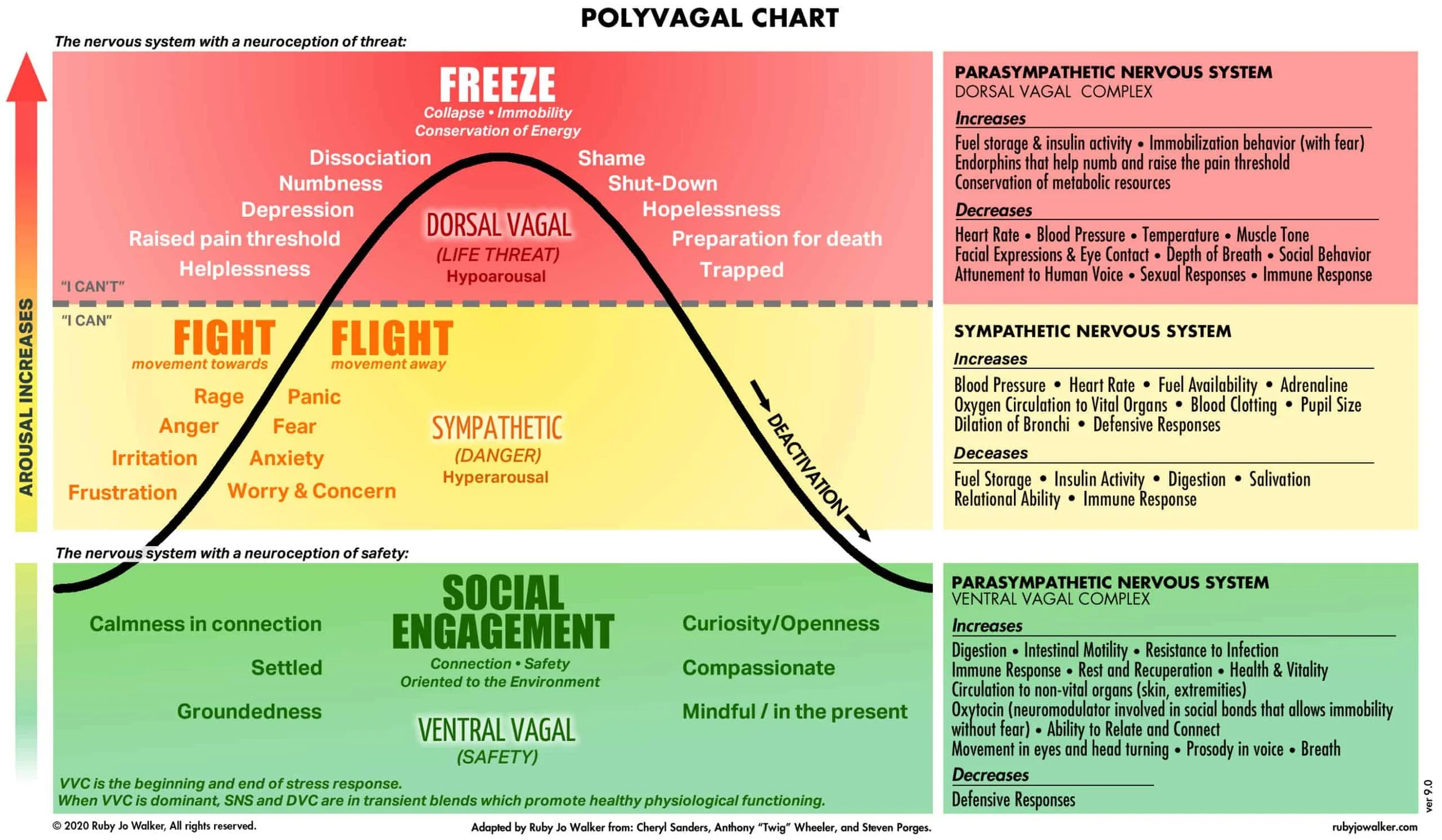
But in 1994, Dr. Stephen Porges introduced the Polyvagal Theory, which suggested that the parasympathetic system isn’t just one state, instead, it has two distinct pathways, linked to the vagus nerve, one of the longest nerves in the body, running from the brainstem to major organs like the heart, lungs, and digestive tract.
The Two Pathways of the Parasympathetic System:
1. Dorsal Vagal Branch
o The older, more primitive pathway
o Activated in extreme stress, triggering a “freeze” or shutdown response
o Think of it as your body’s backup system when fight or flight isn’t possible
2. Ventral Vagal Branch
o The newer, more evolved pathway
o Linked to social engagement, connection, and feeling safe
o When this branch is active, we feel calm, grounded, and open to others.
Yoga as a Tool for Nervous System Regulation
Yoga is an ancient practice that has tools and techniques that have been practised for centuries, and now are being proven to influence nervous system states. By combining movement, breath, and mindful awareness, it allows us to experience and consciously move between the different states of our nervous system, promoting resilience, adaptability, and self-awareness. This is why I speak so often about the nervous system in my classes. Because yoga isn’t just about moving the body, it’s about learning how to feel, to listen, and to restore a sense of safety and ease in the body.
Some ways yoga supports nervous system regulation include:
Mindful Movement and Asana: Movement can guide the nervous system through various states. For example, dynamic flows can gently up-regulate energy and alertness, while slow, intentional practices such as restorative yoga and yin can signal safety, release muscle tension, and down-regulate the system as these activate the parasympathetic nervous system, supporting rest and recovery. (See “Up- & Down-Regulating Your Nervous System Through Yoga” for practical techniques.)
Pranayama (Breathwork): Slow, mindful diaphragmatic breathing downregulates the nervous system, promoting calm and emotional balance.
Meditation & Body Awareness: Observing sensations and emotions without judgment strengthens your ability to respond rather than react.
Vagal Toning Exercises: Techniques like humming, chanting, neck stretches, and twists help stimulate the vagus nerve, enhancing vagal tone and nervous system resilience. (If you’d like to learn more, read my blog on “The Vagus Nerve & Yoga” .)
Through regular practice, yoga builds flexibility not just in your body but also in your nervous system. You learn to move fluidly between alertness, action, and rest so you’re prepared for life’s challenges without feeling constantly “on edge.”
Conclusion
A regulated nervous system is at the heart of physical, emotional, and mental well-being. Yoga offers practical tools to cultivate that regulation, helping you feel grounded, resilient, and connected to yourself and others.
Remember: the goal isn’t to be calm all the time. It’s about flexibility, awareness, and balance. When your nervous system can respond appropriately and return to a safe baseline, you experience life fully stress, joy, and everything in between, without being overwhelmed.
Yoga is a pathway to meet your nervous system with awareness and care. When practised mindfully, it’s more than exercise; it’s a way of learning how to come home to yourself.